







The room was full of surgeons who had flown in from the UK, Australia, and across India, and they were arguing about a shoulder joint.
Not disagreeing in the way that signals conflict. Disagreeing in the way that signals a field that is genuinely alive — where the best practitioners still hold open questions, and where a consultant from London and a consultant from Chennai can spend twenty minutes debating a complex reverse shoulder arthroplasty case and both walk away having updated their thinking.
This is what the Delhi Shoulder Arthroplasty Course 2026 looked like from the inside. As the official media partner, DoubleSure Insights was on the ground for all three days. What we witnessed in that room changed how we think about what surgical expertise actually looks like — and why the doctors we work with in healthcare marketing are the way they are.
DSAC 2026 — At a Glance
Event | Delhi Shoulder Arthroplasty Course (DSAC) 2026 |
Dates | 31 July – 2 August 2026 |
Venue | Hotel The Grand, New Delhi |
Course Directors | Dr. Priyadarshi Amit & Dr. Shashank Mishra |
Faculty | 40+ national and international shoulder surgeons |
International Faculty | UK, Australia, USA |
Programme | Scientific sessions, re-live surgery, cadaveric workshop |
Official Media Partner | DoubleSure.health |
Organised by | Discussmed Wellness Foundation |
Why Shoulder Surgery Needed This Conference
Shoulder arthroplasty — replacement surgery for the shoulder joint — is among the most technically demanding procedures in orthopaedics. It requires surgical skill, deep understanding of anatomy and biomechanics, careful implant selection, and the ability to manage complications that rarely follow textbook patterns.
In India, the clinical expertise to perform this surgery exists. What has historically been harder to find is the structured educational infrastructure around it — the peer networks, the case discussion forums, the cadaveric training programmes, the international knowledge exchange that advances surgical practice faster than any individual surgeon can advance it alone.
The Delhi Shoulder Arthroplasty Course was built to close that gap. Now in 2026, it has become the largest gathering of shoulder surgery expertise in India — a three-day programme that brings the world’s best shoulder surgeons to New Delhi for the kind of learning that only happens when a room full of equals is willing to say what they actually think.
The Scientific Programme — Where Disagreement Was the Point
The first two days of DSAC were structured around scientific sessions covering the full range of shoulder arthroplasty: basic science, reverse shoulder replacement, trauma management, proximal humerus fractures, complications, and revision surgery. National faculty presented alongside international specialists. The presentations were rigorous. The discussions that followed them were more important.
What distinguished DSAC from a standard conference was its culture of open disagreement. Faculty challenged each other’s approaches directly. Cases were debated rather than presented. The audience — itself composed of practising orthopaedic surgeons — pushed back on international speakers and received pushback in return.
This is not how most medical conferences run. Most prioritise the presentation of consensus. DSAC was built around the productive friction of genuine expert disagreement — the recognition that the field is still being written, and that the best surgeons are the ones who remain open to that.
Re-Live Surgery — Learning While the Surgeon Operates
One of the most compelling elements of the DSAC programme was the re-live surgery format. A complex shoulder replacement procedure was demonstrated live — with the operating surgeon narrating every decision in real time. Why this approach. Why this implant. What changes if the anatomy presents differently. Where the risk concentrates.
The room asked questions mid-procedure. The surgeon answered without stopping. The result was the closest thing to being inside an operating theatre that an educational programme can offer — and for the junior surgeons in the audience, it was the kind of learning that no lecture and no textbook can replicate.
Watching from the outside — as a healthcare marketer, not a surgeon — the experience clarified something. The gap between what an experienced surgeon knows and what even a very well-informed patient can understand is enormous. The DSAC re-live sessions made that gap visible in a way that changed how we think about healthcare communication.
The Cadaveric Workshop — Where Technical Confidence Is Built
The final day of DSAC 2026 was dedicated to a cadaveric workshop — the component that many attendees described as the most valuable part of the programme.
Participants performed shoulder arthroplasty techniques on cadaveric specimens under the direct supervision of senior faculty, including international specialists who guided hand position, instrument handling, and decision-making in real time. This is not learning that happens in a seminar room. It happens with real anatomy, real instruments, and an expert standing close enough to correct what the surgeon cannot yet see in themselves.
The muscle memory that surgery requires — the feel of how much force an implant needs, the spatial awareness of operating inside a joint — cannot be built from video or from reading. The cadaveric workshop is where that learning begins.
What stood out, watching from the periphery, was the patience of the faculty. These were surgeons who have performed this procedure hundreds of times, guiding colleagues through early attempts with the same focused attention they bring to their own operating theatres. That patience is itself a form of expertise — and it is what makes a workshop like this worth travelling across the country to attend.
A Conversation with Dr. Priyadarshi Amit
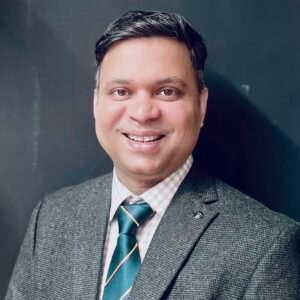
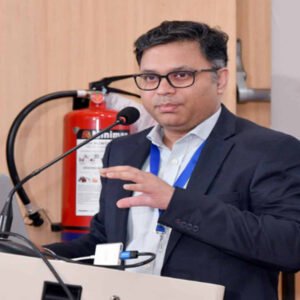
Dr. Priyadarshi Amit, Head of Upper Limb Surgery at Amrita Hospital, Faridabad, is the kind of person who explains complex things simply — not because he is simplifying, but because he has thought about them long enough that the clarity is real.
He built DSAC to address a structural gap he had identified in Indian orthopaedic education. The gap was not in individual surgical skill. Indian surgeons, he said, are technically accomplished. The gap was in structured exposure — to peer critique, to the variation in technique across international practice, to the kind of honest case discussion that only happens when a room of equals is willing to say what they actually think rather than what they think will be well received.
The cadaveric workshop, he emphasised, addresses something that no other educational format can: the ability to make a mistake and learn from it without consequence to a patient. The spatial awareness, the tactile confidence, the instinct for when something is right and when it is not — these are skills that require repetition with real anatomy. DSAC provides that repetition in a supervised environment where the learning is accelerated by immediate expert feedback.
On where shoulder surgery in India is heading, Dr. Amit was measured but clearly optimistic. The implant technology available has improved significantly. The volume of shoulder replacement cases is growing. What DSAC is working to accelerate is the knowledge infrastructure around that growth — so that more patients, in more cities, have access to surgeons who have had the kind of structured exposure that the conference provides.
Dr. Shashank Mishra on the Indian Clinical Reality
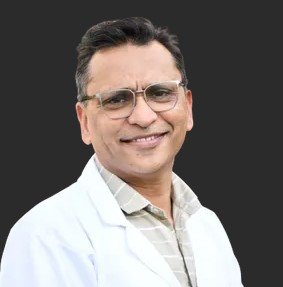
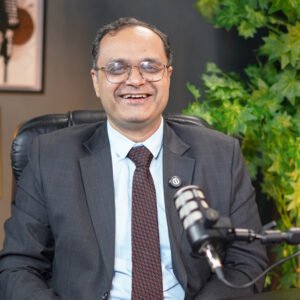
Co-Course Director Dr. Shashank Mishra, Senior Consultant Orthopaedic Surgeon at Sir Ganga Ram Hospital, New Delhi, brought a different emphasis to the conversation.
Indian shoulder surgeons, he pointed out, are not simply applying techniques developed in the United States or the United Kingdom. They are adapting those techniques to a meaningfully different clinical reality. Patient presentations are often at a later stage. Comorbidities are more complex. Post-operative support infrastructure varies significantly depending on where the patient lives and what resources are available. Managing a complex shoulder revision in a tier-one city hospital and managing the same case in a district setting require different thinking — different implant choices, different rehabilitation expectations, different conversations with the patient and their family.
That adaptation is itself a form of expertise. It is expertise that is rarely documented in international journals and rarely presented at international conferences. DSAC is one of the few platforms where Indian surgeons can share that experience with each other and with international faculty who bring an outside perspective.
The result, Dr. Mishra suggested, is a two-way transfer of knowledge — Indian surgeons learning from international technique and experience, and international faculty gaining exposure to clinical complexity they do not routinely encounter in their own practice.
The Moment That Stayed
What remained most powerfully from three days at DSAC had nothing to do with the formal programme.
In the corridor between sessions — between a panel discussion on RSA complications and the afternoon re-live surgery demonstration — we watched some of India’s most senior shoulder surgeons gather informally around a case they had just discussed and continue the conversation. Not presenting positions. Actually asking each other: “What would you have done differently? Has that approach worked for you? I hadn’t thought about it that way.”
These are surgeons with hundreds, in some cases thousands, of completed procedures between them. The intellectual humility in that corridor — the genuine curiosity, the complete absence of hierarchy — was not what a healthcare marketer spending his days explaining medical expertise to patients expected to find at India’s largest shoulder surgery conference.
It was the most accomplished people in the room being the most openly uncertain.
That quality — the willingness to remain a learner at the peak of a career — is what DSAC, at its best, is trying to institutionalise. And it is, ultimately, why the healthcare professionals we work with earn the trust they earn from patients.
What This Means for Shoulder Surgery in India
DSAC 2026 is not just an event. It is part of a longer effort to build the knowledge infrastructure that high-quality surgical care requires.
The conference draws together the national and international faculty whose combined experience represents thousands of shoulder arthroplasty procedures performed across multiple healthcare systems. The scientific sessions, the re-live surgery demonstrations, the cadaveric workshops — each format is designed to transfer a different kind of knowledge. The combination is something no individual surgical training programme can replicate.
As shoulder arthroplasty volumes in India continue to grow, and as the patient population seeking this surgery expands beyond major cities, the need for this kind of structured educational infrastructure will only increase. DSAC is building that infrastructure, one conference at a time.
Key Takeaways
- DSAC 2026 brought together 40+ shoulder surgeons from India, the UK, Australia, and the US at Hotel The Grand, New Delhi
- The conference covered shoulder arthroplasty, reverse shoulder replacement, trauma, complications, and revision surgery
- Re-live surgery sessions allowed surgeons to observe and question complex procedures in real time
- The cadaveric workshop provided hands-on training under direct international faculty supervision
- Course Directors Dr. Priyadarshi Amit and Dr. Shashank Mishra emphasised structured peer learning as the core purpose of the conference
- DSAC is part of a broader effort to build world-class shoulder surgery education infrastructure in India